
Protection against IED in general, and particularly shaped charge based IEDs rely on several layers, including “soft kill”, passive, and active defenses:
Electronic Protection
A mobile electronic jammer is part of Elisra’s EJAB family of electronic jammers, designed to disrupt and deny remote activation of Improvised Explosive Devices (IEDs). Covering a wide frequency band from VHF, UHF and high cellular bandwidths, EJAB encounters all types of remote-controlled applications, from simple RC transmitters to the most sophisticated cellphones and wireless devices. The jammer can operate as stand-alone systems, and have proved themselves through years of combat operations in Lebanon and the current conflict, where they were they have successfully protected combat vehicles, convoys, and fixed facilities as well as protection of EOD teams and isolation of terrorist attack scenes.
Passive Protection
Lightweight composite armor suits offer some protection for soft vehicles against IED, fragmentation and small arms. Since basic IED charges have low penetration efficiency, one of the most important add-on protections for target vehicles are ballistic plate, made of steel or composite materials and blast mitigation material which absorbs the blast effect. Flexible composite fabric liners applied inside the fighting compartment of armored vehicles can also absorb much of the melted metal spall generated when a shaped charge penetrates through the main armor, therefore limiting the internal damage and casualties. For further protection, heavier ceramic protection is used.
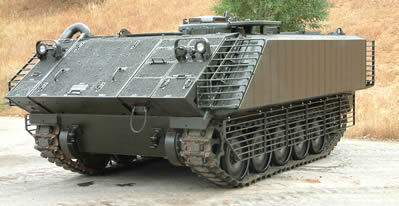
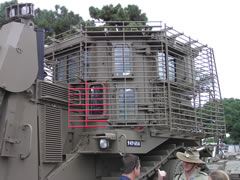 These materials can be designed to withstand attacks of shaped charges munitions. Another passive protection method is “caging”, frames of slat armor used with the US Army Stryker armored vehicle in Iraq. This cage encircles the vehicle’s hull adding all-round protection, by causing the incoming RPG to ‘defuse’ between the cage and main armor. A similar system is already used by the IDF as part of the armor protection of D-9 Dozers, heavy APCs and newly up-armored M113.
Standoff Laser Defeat Systems
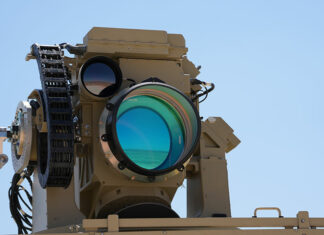
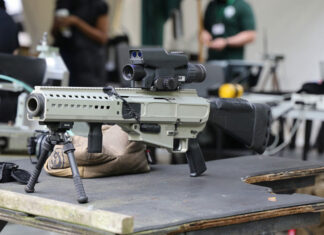
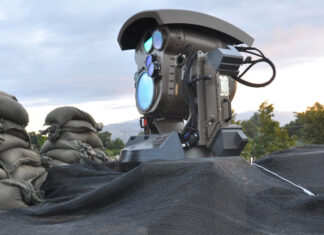
HIgh power, directed energy from a laser is capable of rapidly clearing unexploded ordnance and defeating IEDs by inducing a low-order burning or deflagration reaction in the explosive fill at safe stand-off ranges (see photos above). THOR developed by RAFAEL uses powerful, air cooled laser, and a coaxial 12.7mm M2 heavy machine gun firing single bullets like a sniper rifle, acting as a standoff disrupter, destroying fusing, thick-cased munitions and booby traps.
Active Protection
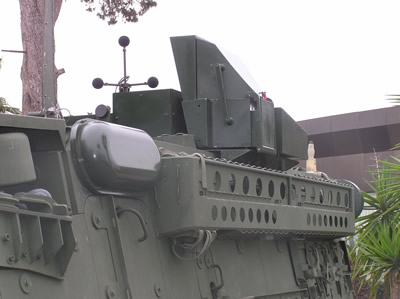
Explosive Reactive armor (ERA) is utilized as an effective add-on protection, with modules conforming of thin explosive sheath covered by oblique metal plates. The explosive is activated when sensing an impact of an explosive charge, which raises the metal plate into the plasma jet, disrupting its formation and eliminates its energy before it hits the main armor. Among the most advanced protection systems are the Active Protection Systems (APS). Latest among these is the Israeli designed Trophy Active Defense System (ADS) which the US Army plans to introduce with every new and existing combat vehicle it fields in Iraq. The Trophy system has three elements providing – Threat Detection and Tracking, Launching and Intercept functions. The Threat Detection and Warning subsystem consists of several sensors, including flat-panel radars, placed at strategic locations around the protected vehicle, to provide full hemispherical coverage. Once an incoming threat is detected, identified and verified, the Countermeasure Assembly is opened and launched automatically into a ballistic trajectory intercepting the incoming threat at a relatively safe distance.
Additional parts of this article:
- IED – Shaped Charges
- IED – Shaped Charges part II
- Shaped Charges IED in the Middle East
- Protection Against Shaped Charge IEDs – The Israeli Experience